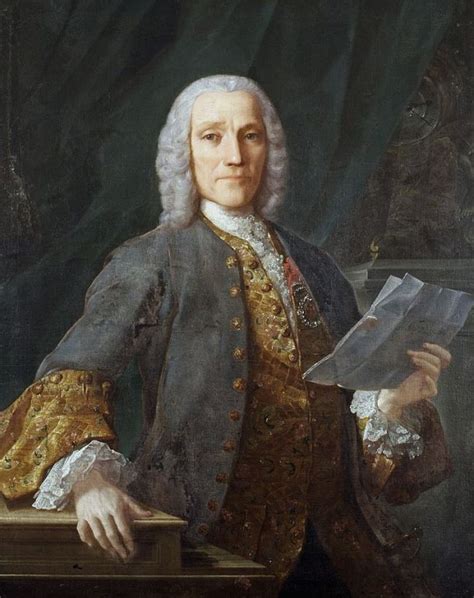
Scarlatti left behind 556 keyboard sonatas, and likely wrote/improvised many more that we have no record of.
This massive collection of sonatas is a treasure for all keyboard players, and in them can be found suitable music for a diversity of interpretations, occasions, instrumentation, and techniques.
For his upcoming birthday, I would like to share my list of favorites and personal notes on these sonatas, as well as share some wonderful resources for your own exploration of this music.
Personal Favorites
- K.1 in D Minor – A quick little two-voice invention. Great attention grabber.
- K.6 in F Major – Very lyrical melody interspaced with much scale work.
- K.8 in G Minor – Opens like an overture Bach could have written. Once the crush chords come in you realize this is a dirge, it’s really a funeral march.
- K.9 in D Minor – Gentle and pastoral, like a shepherd’s tune. The development is like a prototype of sonata-form in its use of the opening theme, complete with a recapitulation.
- K.11 in C Minor – Has a bit of an unsettling mood about it.
- K.13 in G Major – Earworm of a melody and fun repeated notes.
- K.19 in F Minor – A great example of a sonata that stands up to different approaches. It can be played with a rhythmic, pulsing left hand and exciting melody as Scott Ross performs it in the linked video. It can also take on a meditative quality when played slower and more romantically, as Dubravka Tomšič performs here. Either way, there is fantastic tension in the B section.
- K.25 in F# Minor – Beautiful, motor-like motif with lots of hand crossing. Very harmonically interesting. Lyrical, but rhythmic at the same time.
- K.27 in B Minor – Begins with typical imitative counterpoint, but quickly springs into a spanish guitar texture. Gorgeous harmony, and romantically introspective.
- K.30 in G Minor – “Cat’s Fugue”. Supposedly, Scarlatti’s cat, Pulcinella, walked across his keyboard and played the theme for this fugue.
- K.32 in D Minor – Amazing how such a simple piece could be so profound.
- K.54 in A Minor – Plaintive melody. Nice sequences and imitations all over the place.
- K.61 in A Minor – Fun set of variations on a theme.
- K.63 in G Major – A confident melody full of joy. A fun capriccio that reminds me of Handel’s keyboard style.
- K.69 in F Minor – Gracefuly flows between four-part counterpoint and homophonic textures without any interruption of mood. Something about it refuses to let you go; feels everlasting.
- K.70 in Bb Major – A short, but fun two-voice invention.
- K.81 in E Minor – Fun piece to practice figured bass with, especially if you have a friend to play the melody on their violin, flute, oboe, etc… Even simply playing just the bass and melody by yourself with no figuration doesn’t sound bad.
- K.87 in B Minor – Contrapuntal, yet lyrical; meditative, yet profound. Trickier to play than it would seem. Horowitz’s favorite among Scarlatti’s sonatas.
- K.94 in F Major – Short minuet, with some interesting chromaticism popping up in the second half.
- K.95 in C Major – Short and sweet, with fun call-response hand crossing. Coincidence or not, the Papageno duet from Mozart’s “The Magic Flute” is quite similar to this.
- K.98 in E Minor – Feels modern in a way; it seems to beg for romantic phrasing. Interesting syncopation.
- K.99 in C Minor – Good example of how hand-crossing can be more than just a flashy technique, but can artistically contribute to the atmosphere/mood of a piece.
- K.111 in G Minor – Disjointed, in so small part to the syncopated block chords.
- K.112 in Bb Major – Lilting sonata with ghostly harmonies.
- K.113 in A Major – This one really makes you want to move.
- K.115 in C Minor – This one is approaching Sturm und Drang; parts of it feel like something Haydn or C.P.E. Bach could have composed. A piano is perfect for shading and phrasing the melody that GREATLY benefits from such, but a harpsichord does a better job of showcasing the dissonances and tension, especially in the B section, as in this performance by Scott Ross.
- K.119 in D Minor – Catchy, rhythmic, and masterful use of tension. In my opinion, a harpsichord is an absolute must for this sonata; a piano turns many of of the dissonances into a muddy mess, and struggles to capture the flamenco feel to this piece (not to mention the guitar and castanet sound effects written into the music). This section in the second half of the piece uses tone clusters to amazing effect.
- K.126 in C Minor – Believed to have been written after the death of his first wife. Seems to symbolically begin with one hand alone, without its partner. Falling 6th and 3rds at the end like being lowered into one’s grave.
- K.132 in C Major – Absolutely gorgeous and emotional. Like a couple’s last moments together; making the most of them. The “goodbye” gets delayed repeatedly at the end of each section, before finally being accepted in the end: one last hug, one last kiss, one last look… The long trill in the second half over the plaintive left hand is beautiful and heartbreaking.
- K.141 in D Minor – Often played at breakneck speed as a showoff piece, but it benefits from a slower (moderate) tempo; it gains a kind of relentless inevitability.
- K.159 in C Major – Triple-meter, thirds, graces, and trills: classic Scarlatti.
- K.185 in F Minor – This piece is like a ponderous stroll.
- K.197 in B Minor – Matches perfectly the feeling of contemplation when sitting alone in your room late at night. (I think Daniel Eppinger’s performance captures this feeling best.)
- K.198 in E Minor – Another really nice two-voice invention. Fun piece.
- K.203 in E Minor – Seems like it could have been a study in syncopation; I wonder if it gave princess Barbara much trouble.
- K.208 in A Major – Gorgeous adagio; great study in lyricism. The tied notes create a kind of written-out rubato. The use of the lydian mode here creates a nice pull to the dominant and creates some forward momentum.
- K.213 in D Minor – This one really sings if it’s played well. It could well be an aria in an opera, particularly the B section (listen to a few arias from Allesandro Scarlatti’s operas, like this one, and you will see what I mean).
- K.291 in E Minor – Simple, but captivating melody.
- K.380 in E Major – One of the famous ones you have certainly heard before. It is kind of symphonic in its construction – trumpets are the most obvious, but string effects can be heard as well.
- K.417 in D Minor – Very engaging fugue. The left hand 8th notes require some stamina to pull off well.
- K.426 in G Minor – Odd, unprepared modulation from G Minor to Ab Major after a measure of silence. Enharmonic modulation from Ab Major to G# Major. Plenty of interesting harmonic choices – the whole piece sounds more modern than its time. The section starting at m.134 sounds like it could be a transcription of a Brahms symphony, yet was composed in the early 18th century.
- K.427 in G Major – Interesting tempo indication: “Presto quanto sia possibile” “As fast as possible”
- K.450 in G Minor – Very engaging spanish dance (the trills in the right hand seem to clearly be castanets).
- K.454 in G Major – This sonata feels like a good friend. Lots of scales and patterns in 3rds make for a good technical exercise.
- K.466 in F Minor – Tranquil and meditative. Compare with Clementi’s Op.13 No.6. Three-against-two all over the place.
- K.481 in F Minor – Very mature piece of music.
- K.490 in D Major – Improvisatory scales alternating with stately, refined dotted rhythm.
- K.492 in D Major – Brings to mind a spanish dance. Plenty of guitar-strumming imitation.
- K.497 in B Minor – The repeated note/octave sections are so uplifting. Here and here and here.
- K.511 in D Major – Another two-voice invention kind of piece. This one is dramatic and exciting.
- K.513 in C Major – The two pieces are unlikely to be directly related, but it is interesting to note the shared opening theme of this sonata and Mozart’s later 11th sonata in A Major, K.331.
- K.517 in D Minor – Extremely intense, virtuosic piece. Great technical study for fast scales and broken chords.
- K.531 in E Major – Joyful sonata that can accommodate all kinds of interpretations and timbres. Some cool, modern-sounding effects in m.73 with that minor 6th (modern ears will likely hear that as an augmented 5th that is so often used in space-related movie scores).
- K.544 in Bb Major – Pretty harmonically interesting. French+6 chord in m.11, followed by a measure marked “arbiteri” sot that the effect can be fully savored.K.217 in A Minor – The closing of each half is beautiful: like the sad acceptance of the end of something that was great. Really, the entire thing is heart-wrenchingly beautiful, especially the second half. It also works very well on the piano, as in this performance.
Resources
- Sheet music for all the sonatas listed above can be found in the PDF I share in this post. I downloaded all the sheet music from IMSLP.
- A man on YouTube named Miguel Fontes Meira is currently in the process of uploading videos of Scott Ross’s recordings of the Scarlatti sonatas with synced sheet music, for every single sonata. I have linked his videos numerous times in my Personal Favorites sections above. Here is a link to his channel.
- I recently uploaded this post in which I share a graph I made of the statistics behind the chosen key signatures for Scarlatti’s sonatas. I think the results are interesting.
Bonus
- Scarlatti on organ! This is the first of four videos the organist Daria Burlak uploaded to YouTube. I think these sonatas work exceptionally well on the organ, especially if the organist has a good sense for coloring with the different stops. All the repeated sections and ideas in Scarlatti’s sonatas are well suited to being played with different stops.
Afterthoughts
I hope this post has inspired you to take a closer look at some of Scarlatti’s music, and especially to pull out some sonatas to play with yourself, whatever your instrument may be. Most of the sonatas are quite short, and don’t require incredibly virtuosic technique, so there is plenty for everybody and anybody to pick and explore.
Please leave your own favorites or comments below if you have any, and happy exploring~
 Exploring Music